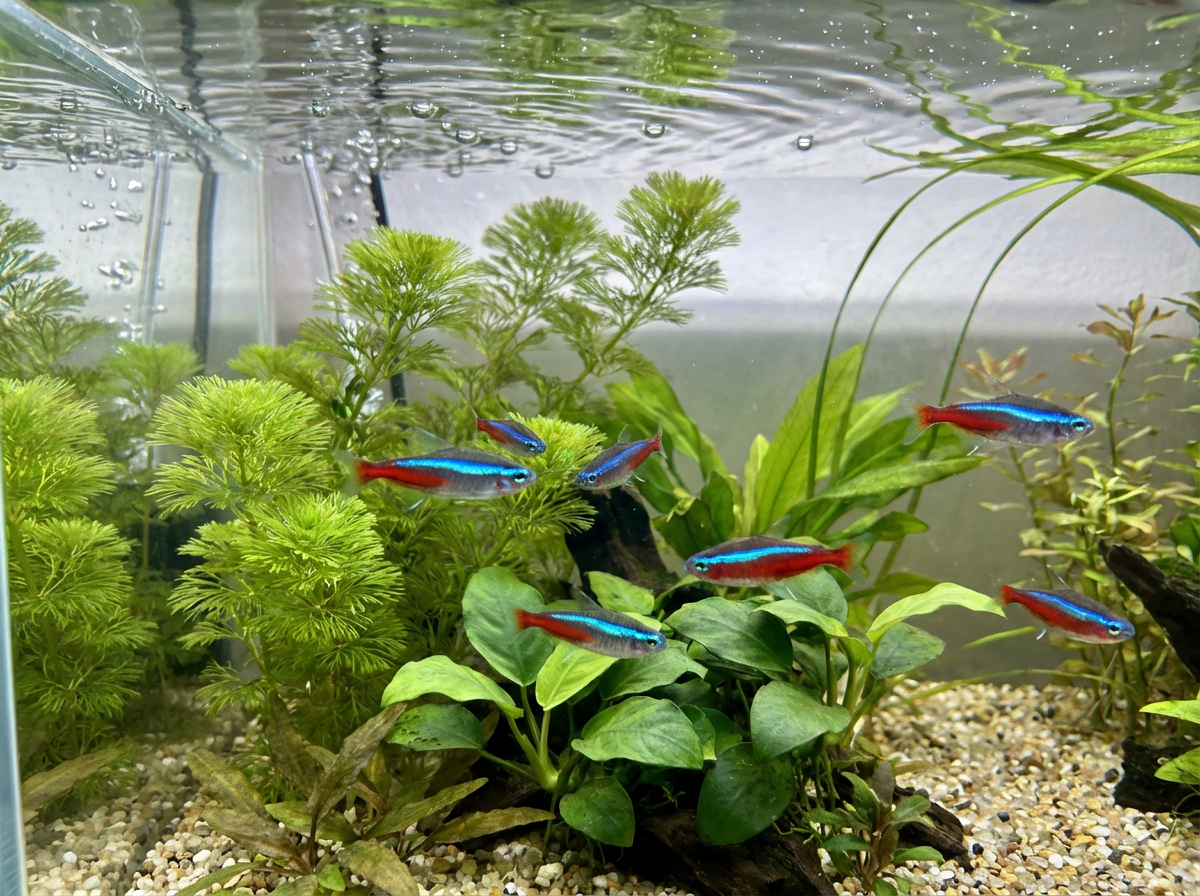
About Neon Tetras
The Neon Tetra (Paracheirodon innesi) is a freshwater fish of the characin family (Characidae) of order Characiformes. Native to blackwater and clearwater streams in the Amazon basin of South America, this small, colorful fish is one of the most popular tropical aquarium fish.
Appearance
Neon Tetras are known for their iridescent blue horizontal stripe along their sides, extending from the nose to the base of the adipose fin, and a bright red stripe that begins at the middle of the body and extends to the base of the caudal fin.
Habitat
Found in the upper Amazon basin in tropical South America, Neon Tetras thrive in soft, acidic water with dense vegetation and dim lighting. They are shoaling fish and feel most secure in groups of six or more.
Quick Stats
| Scientific Name | Paracheirodon innesi |
| Care Level | Easy / Beginner |
| Min. Tank Size | 10 Gallons |
| Temperature | 20-26°C (68-79°F) |
| pH | 6.0 - 7.0 |
| Size | 1.5 inches (4 cm) |
Frequently Asked Questions
How many Neon Tetras should be kept together?
Neon Tetras are schooling fish and should be kept in groups of at least 6. A group of 10 or more is ideal for them to feel secure and display natural behaviors.
What is the best water temperature for Neon Tetras?
They thrive in varied tropical temperatures between 20-26°C (68-79°F). Consistency is key.
What do Neon Tetras eat?
They are omnivores. Their diet should consist of high-quality flake food, micro-pellets, and occasional treats like frozen brine shrimp, daphnia, or bloodworms.
Are Neon Tetras aggressive?
No, they are very peaceful community fish. They can be fin-nipped by larger fish, so keep them with other small, peaceful species like Rasboras, Corydoras, or other Tetras.
Fascinating Facts
- Neon Tetras were first introduced to the aquarium trade in 1936
- They are schooling fish that display impressive synchronized swimming patterns
- Their vibrant colors are used for communication and camouflage in their natural habitat
- Neon Tetras have an average lifespan of 3-5 years in captivity with proper care
- They are omnivorous, feeding on small invertebrates, algae, and commercial fish foods